Values to Vision

I was invited to participate as a Facilitator at the Golden Wellness Festival, Castlemaine.

It was their inaugural event, the brainchild of Ciel Lindley, who I had coffee with in July to chat about her vision.
This one-day event – held on Saturday 31 Oct 2026 – came about to bring together people working in the wellness space and showcase their offerings. Practitioners, healers, makers and thought leaders for a full day of inspiration, restoration and connection. The festival opened with a heartfelt community ceremony and concluded with Kirtan music and chanting, reflection and celebration.

The space was set up with marques with various names – The Circle, The Temples, The Spa, The Pavilions, The Marketplace, and I was invited to be part of a three-person team in The Vision Hearth.

In September, Ciel facilitated an e-introduction to Emma Sodamaco from Collective Reverie, and Kerri Aitken of Kerri Aitken Coaching and we began collaborating online for our part in the festival.

My part was to facilitate a Values to Vision exercise – so let me explain Values first:

As a career coach, one of the self-assessment tools I use is a Values and Motivators exercise to help job-seekers or career changers reflect on and identify the values that are MOST IMPORTANT to them – and what is motivating to them in their role and the workplace. It helps to become clear about your ideal work culture or environment, the type of work, responsibilities, terms and conditions. After all, you spend a large chunk of time at work, so you want to make sure you feel good when you’re there.

For the Golden Wellness Festival, I created a values list to guide people to reflect on their values in life right now – and to narrow it down to three (yes 3!) MOST IMPORTANT values – and then create a vision board.

A vision board is a collage of images, pictures, and affirmations that represent your values, dreams, goals, and desires, serving as a source of inspiration and motivation.

  • The neuroscience of vision boarding is how we process the millions of bits of information that come through our sensors per second.
  • The unconscious mind filters out and compresses all these millions of bits of info every single second – for what we need to focus on.
  • Vision boarding can help us steer our attention and cut thru the noise. It is in fact a mindful activity.
  • We have A WHOLE occipital lobe (at the back of our BRAIN) dedicated to visual processing. Seeing visual pictures (on your vision board) is a powerful way of emotionally activating your goals and really getting them to stick in your head.

During the month’s lead up to the event, I liaised with the team and set about collecting magazines and craft materials for our making tables in the Vision Hearth. It was at this time that I came down with a virus that I couldn’t shake and so decided to withdraw from the festival as a facilitator. I listened to my body – with fatigue and a temporary hearing impairment, I needed to put my health first.

Emma is a natural leader, where she brought the vision and the logistics together, communicating well with Kerri and myself in the lead up to Golden Wellness. On the day before the festival, Emma visited me to collect the magazines and art materials, and she gifted me a set of her newly created Listening Cards – a reflective exercise to ‘imagine the path ahead’ comprising 8 domain cards and 4 season cards. More about this later.
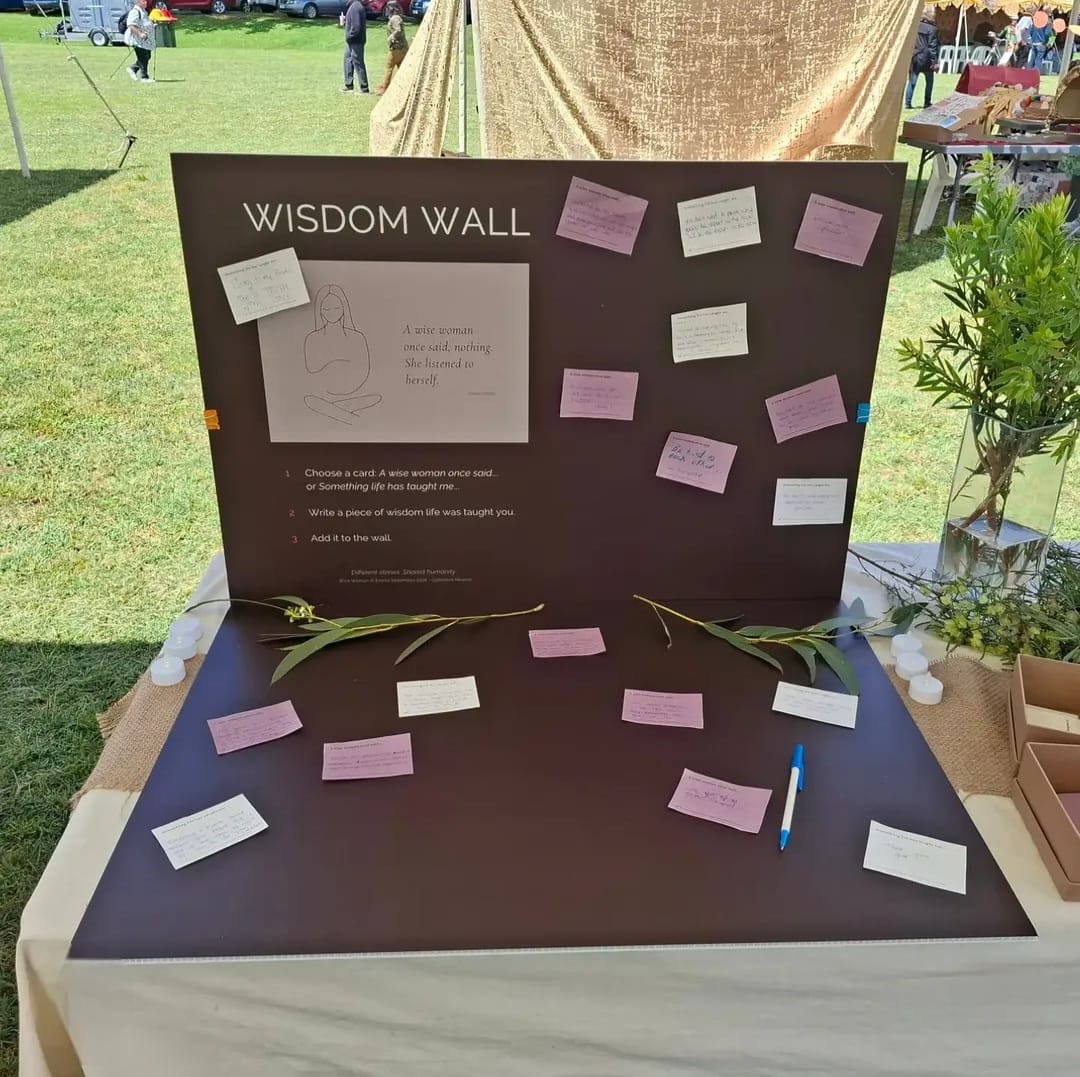
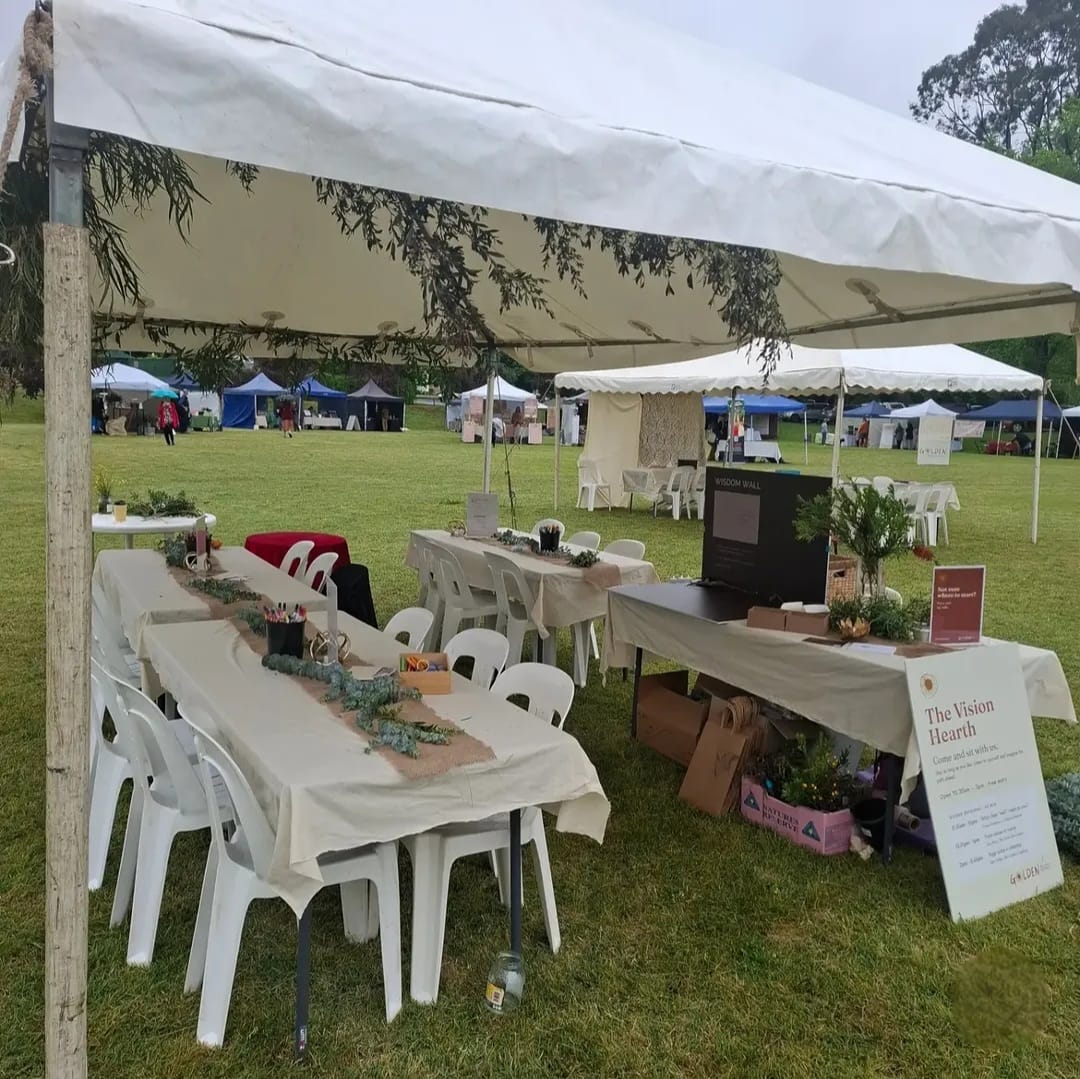
On festival day, I felt well enough to turn up and be with the team – going gently within my capacity. People were welcomed, listened to, guided, and they left with new wisdoms and a show bag of resources. I took part in Yoga Nidra led by Kerri, met new people and had lovely chats.

I wandered off for some lunch (because sustenance is good for your health) AND I had some acupuncture on my blocked ear!
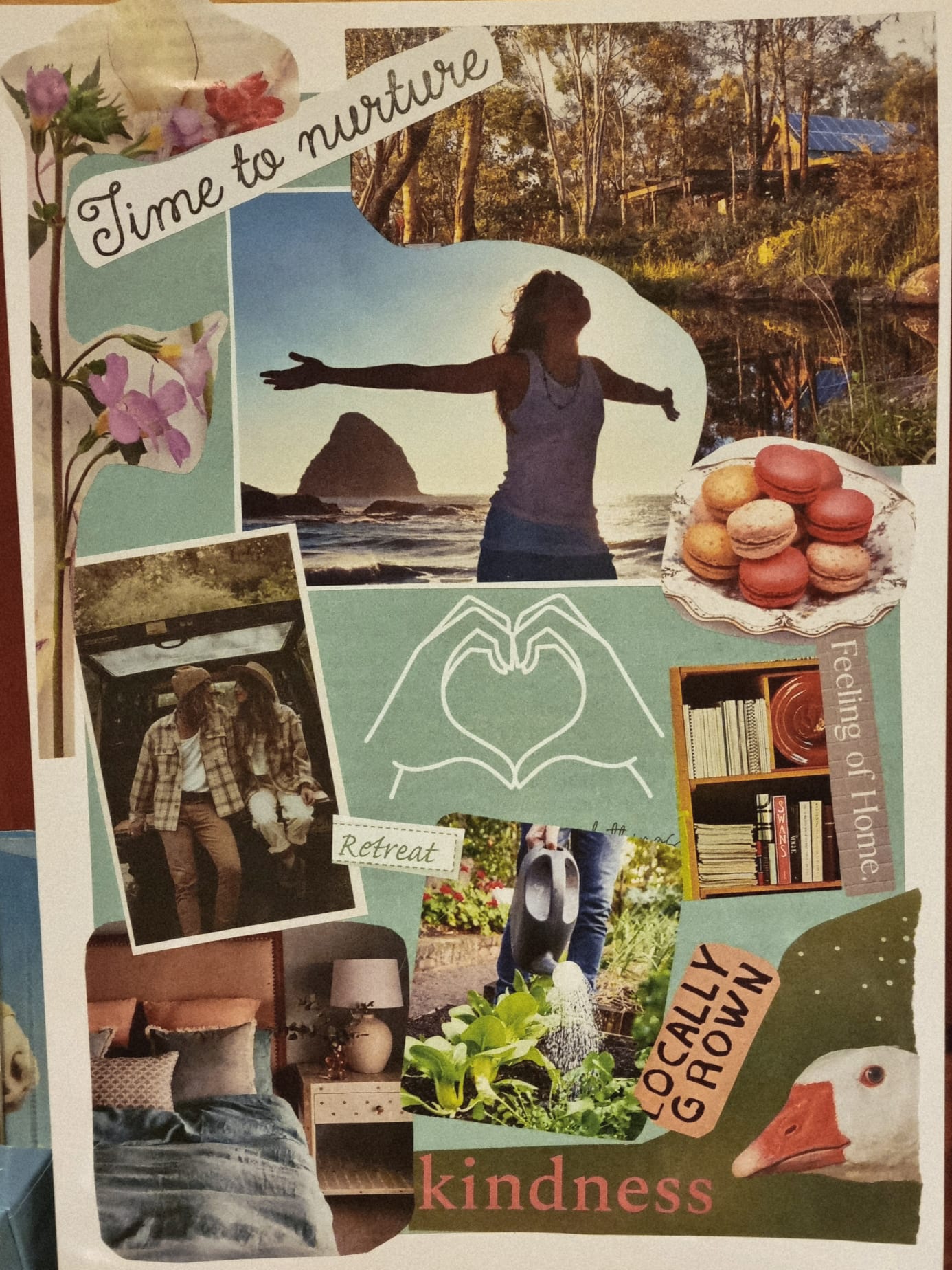
Gen’s Vision Board

That evening I sat at home, feeling Zen, and I finished my Vision Board, based on the Collective Reverie Listening cards put together by Emma – she was keen for feedback on how they worked, and we had chatted at the festival about the space I was in. She listened, validated and I could lean in more readily to the cards that honoured where I’m at right now. A time to be grounded, listen to my heart & emotions, and be kind to myself. The ‘season’ for me is a time for REST – where I can nurture myself, have comfort and ease, and regain my strength for what is next.

My vision board sits on the shelf beside my bed. It is my anchor for now – a place to return to and remind me that it’s ok to have afternoon naps, potter in the garden, listen to the birds and gaze out the window.

I feel really proud of the festival director – Ciel, and her Heart Trust team – and I know that great things are going to come from this. Golden Wellness Festival was the founding event of the new Golden Wellness Network – a growing community of practitioners, facilitators, educators, artists and changemakers committed to supporting the wellbeing of our region.

To find out more visit goldenwellnessfestival.com/directory-network

Workplace Wellbeing

What’s working well for you in managing your wellbeing?

This is a question I asked at a lunch I ran last week for a local business hub in Castlemaine.

The responses included… meditation, fitness activities, healthy eating and getting out in nature. These are such wonderful things to do to help boost positive emotions that help us feel good and function well in the world.

I’m currently studying a Certificate in Creating Wellbeing with an organisation called Michelle McQuaid – leaders in wellbeing conversations and cultural change. This course is funded by the Mental Wellbeing of Business Communities Grant Program through Business Victoria. As secretary of Business Mount Alexander, I’m rolling out a series of three catered events for people in business throughout the Mount Alexander shire to learn more about this important topic.

Workplace studies have found that when people have higher levels of wellbeing they are likely to feel more engaged, be more productive, satisfied in their job and less likely to burn out. Wellbeing reduces likelihood of quitting, reduces workplace incidents, lowers absenteeism and staff turnover.

Michelle McQuaid uses Dr Martin Seligman’s PERMAH Framework (2012) which points to six wellbeing factors that enable us to feel good and function well: Positive Emotion; Engagement; Relationships; Meaning; Accomplishment and Health. Cultivating each of the PERMAH factors can help us thrive and this model caters for everyone where our wellbeing needs are different and varied depending on who we are, what’s happening around us and the choices we are making.

We typically move in and out of feelings of stress on varying levels every day as our nervous system responds to events and activities.   

So how do we become an active participant to best manage our mental health and wellbeing? Acknowledging and reflecting on ‘what’s working well’ for yourself and others is a wonderful step but how do we make change when things are not going so well?

Where are you struggling?

This is an important question to ask as it helps us think about and identify what is happening now and what steps or actions we can take.

  • Perhaps you work in a solo business and feel a lack of connection?
  • Is your end-of-financial-year paperwork piling up?
  • Are you seeking a career change and going round in circles with indecision?

What have you tried?

What I’ve learnt in my wellbeing training is to start small. Researchers have found that we best care for our wellbeing by regularly engaging in wellbeing activities, also known as ‘positive interventions’. It’s about creating tiny habits that help us make the change we need.  I’ve printed out and stuck a chart on my wall to remind me of simple things that I can try, including:

  • Savouring the good things
  • Phoning or messaging a friend for a chat
  • Reflecting on what you’ve learned at the end of each day
  • Helping someone with a five minute favour
  • Scheduling rest breaks
  • Breathing deeply

Personally, I had been struggling with low energy each day, I felt quite sluggish and unmotivated. I noticed my diet was carb heavy and I wasn’t doing much exercise.

So I tried an app called Streaks as a tool to help me work towards my health & fitness goals. The app allows you to enter five daily habits you want to commit to. Mine were:

Walk | Drink 3 glasses of water | Eat Greens | Eat Protein | Read

Each night before bed, I mark what I’ve completed and the app shows a streak of my ‘achievements’ over time. If I miss a day then the streak resets to zero, but when I view the month it highlights all the days I’ve completed each task.

I’m happy to report I’m exercising more and eating less carbs, which flows on to feeling much better.

Understanding why you want to make improvements (using the PERMAH model for example) and committing to consistently prioritising your new habits will help sustain your motivation to succeed.

What have you learnt?

We know the saying – Nothing ventured, nothing gained. Sometimes when we try new things they don’t always work. Rather than seeing this as a failure, this is feedback for us and rather than beating yourself up with self-criticism, instead practise self-compassion for your efforts. This is a time to learn from the experience and adjust, which loops us back to ‘playfully experimenting’ with introducing another small change (tiny habit)!

Conclusion

Caring for our wellbeing can be challenging and feelings will ebb and flow based on our efforts and what is happening in the world around us. When we make time to actively participate in caring for our wellbeing, we begin to notice incremental improvements, leading to feeling happier, healthier, more productive and resilient. Yes, it takes effort and commitment  but by prioritizing a small amount of time each day can set you on the path to feeling good.

You can listen to the sound recording (9 mins) of this article which was presented on Gen’s radio show about mental health and wellbeing – Mind Ya Head (94.9 mainFM).